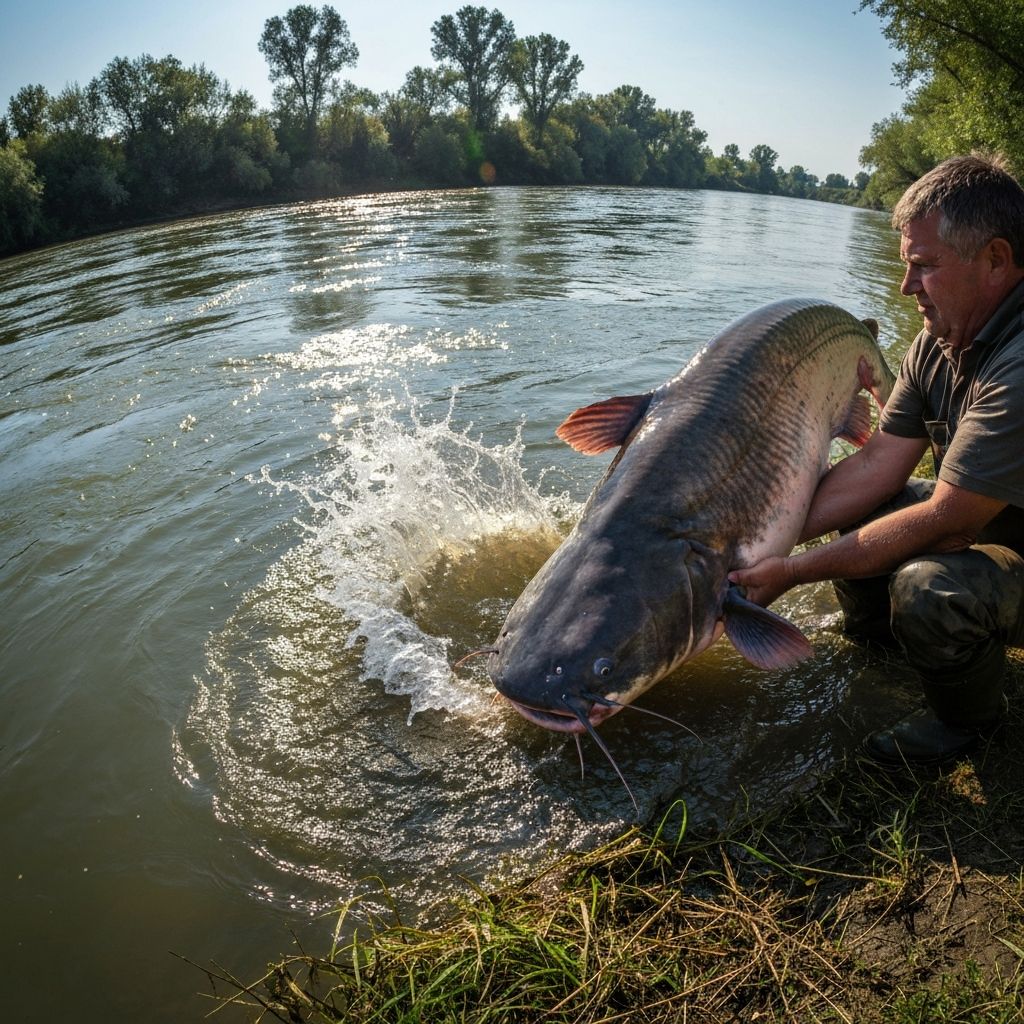
The Tisza and Its Catfish
The River Tisza is home to one of the largest and most established populations of Wels catfish in Central Europe. The river's slow deep stretches, extensive flood banks, and warm summer water temperatures create ideal conditions for catfish to reach exceptional sizes. Fish exceeding 100kg have been recorded, and catches of 50–70kg are not uncommon for experienced catfish anglers targeting the right sections in peak season.
Understanding Catfish Behaviour on the Tisza
Wels catfish on the Tisza are largely nocturnal hunters, particularly in summer. They spend the day in the deepest available holes - bends in the river where the current has scoured the bottom to depths of 6–12 metres are the classic holding spots. At night they move into shallower, marginal areas to hunt for frogs, small mammals, large fish and crayfish.
Water temperature is the key variable. Catfish become highly active above 20°C and the peak season on the Tisza runs from late June through to late September. Below 15°C activity drops sharply, though fish can still be caught in the deep holding spots with a slow, static presentation.
Recommended Rigs
The paternoster rig is the most widely used catfish rig on the Tisza. A heavy running sinker (150–300g depending on current) sits on the main line, stopped by a swivel. A 50–80cm hooklink of 80–120lb monofilament or steel-coated braid connects to one or two large wide-gape hooks in size 4/0–8/0. The paternoster presents the bait just off the bottom in the strike zone while keeping the terminal tackle pinned in strong current.
The float rig is exceptionally effective for fishing catfish in marginal areas at night. A large pike float set to fish the bait 30–60cm off the bottom, combined with a slow drift downstream along the reed margins, covers water efficiently and allows natural bait presentation. The visual take on a float in a head torch beam is one of the most dramatic moments in Hungarian fishing.
Bait for Tisza Catfish
Large live or dead baits are the first choice - roach, bream and chub in the 300–700g range are standard. Dead baits can be enhanced with a cut to release scent into the current. Squid is a highly effective alternative and has the practical advantage of staying on the hook better than soft fish baits in strong current.
For surface and night fishing in summer, worm clusters - a large ball of several dozen worms - produce excellent results along the margins. The scent trail in moving water can attract catfish from considerable distances.
Best Sections of the Tisza for Catfish
- The deep bends between Szolnok and Csongrád hold the highest concentration of large catfish.
- Below Tiszafüred, the combination of deep pools and extensive backwaters provides excellent habitat.
- The confluence with the Maros near Szeged is a renowned hotspot, particularly in late summer.
Tackle and Safety
Use a minimum 80lb braid main line. A robust carp or specialist catfish rod rated to 200g casting weight is needed to handle both the heavy terminal tackle and the run of a large fish. Always use a short wire or heavy-coated hooklink - the rough mouth of a large Wels will quickly destroy standard fluorocarbon.
Night fishing on the Tisza requires care. Banks can be slippery and unstable in the dark. Always fish with a partner if possible, wear a life jacket when boating, and inform someone of your location before an overnight session.