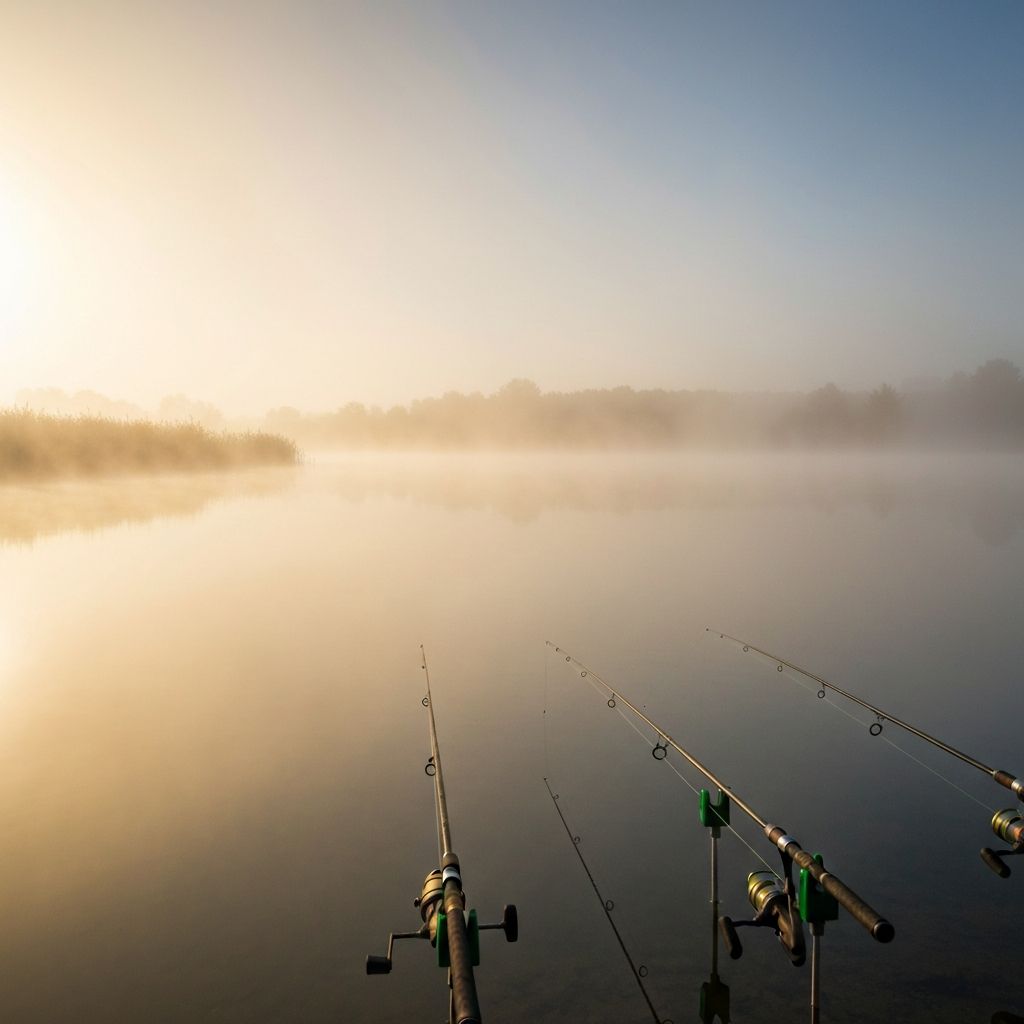
The Dawn Window
The first two hours after sunrise are, for most freshwater species, the single most productive feeding period of the day. This is not a myth or an old angler's tale - it is backed by decades of catch records and has a straightforward biological explanation. Understanding why it happens gives you a meaningful edge on the water.
Light, Temperature and Fish Behaviour
At dawn, light levels are low and water temperatures are at their coolest following the night. For predatory fish such as pike and zander, low light reduces their visibility to prey, making ambush far easier. This is why spinning and lure fishing almost always produces more in the first and last hours of daylight than at midday.
For bottom-feeding species like carp and bream, the early morning period coincides with natural feeding rhythms built up over millions of years. Invertebrates and natural food sources are most abundant and active in the margins and on the lakebed in the hours around dawn - and fish have evolved to exploit this.
Water Oxygen Levels
Dissolved oxygen in still waters typically peaks in the early morning as a result of overnight respiration and the absence of photosynthesis during the night hours. Higher oxygen levels increase fish metabolism and appetite. As the day progresses and photosynthesis resumes, oxygen levels fluctuate - and fish feeding activity often follows.
Minimal Disturbance
On popular Hungarian lakes and rivers, early morning simply means fewer anglers, fewer boats, and less bank disturbance. On hard-fished waters, this alone can make a significant difference. Fish that have been scared from the margins during the day will return to feed confidently in the calm of early morning.
How to Make the Most of the Dawn Session
Arrive at least 30 minutes before first light. Set up in the dark. If you arrive when fish are already feeding and immediately begin making noise and splashing leads into the water, you have already wasted the best part of the session.
- Pre-bait the swim the evening before where possible - fish will already be feeding when you arrive.
- Use a head torch with a red light setting to preserve your night vision and avoid spooking fish.
- For lure fishing, start with darker, more visible patterns - black, purple and dark blue work well in low light conditions before the sun rises.
- In summer, be prepared to switch tactics as the sun climbs and fish move to deeper, cooler water - the morning window can close quickly.
- In autumn and spring, the productive window is longer - fish continue feeding into mid-morning as temperatures remain comfortable.
When Evening Outperforms Morning
In high summer when water temperatures exceed 22°C, the evening session can actually outperform morning. Fish that have been inactive during the heat of the day often begin a second feeding spell in the last 90 minutes of light. On Lake Balaton in July and August, the evening rise is as reliable as any dawn session.