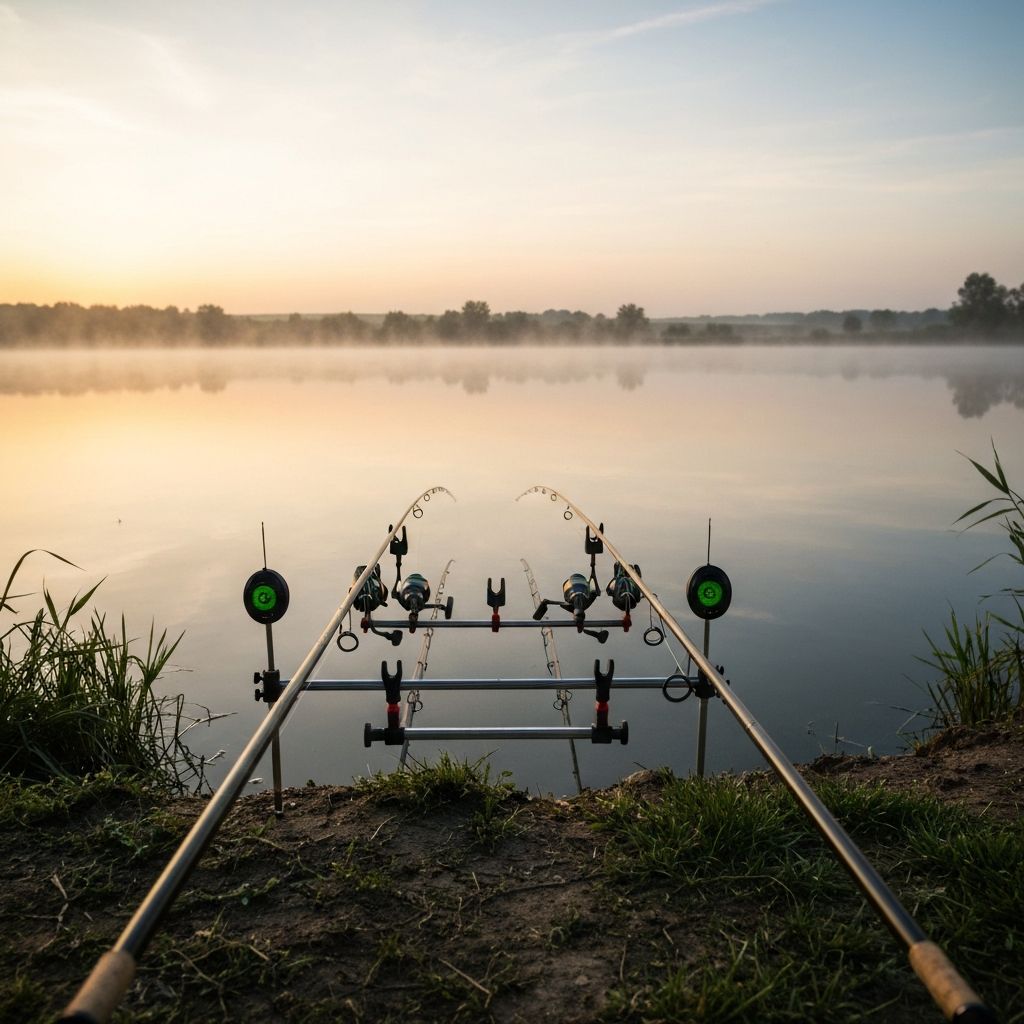
What is Feeder Fishing?
Feeder fishing is a method where a small wire or plastic cage - the feeder - is filled with groundbait or loose feed and attached to your line above the hook. When cast, the feeder deposits bait precisely where your hook bait lands, creating a concentrated food source that draws fish to your swim. It is one of the most effective methods for bream, tench, roach, and smaller carp on still and slow-moving waters.
Choosing the Right Rod
A dedicated feeder rod is typically 3–3.6 metres long with a sensitive quiver tip - a flexible extension at the top section that acts as a visual bite indicator. For lake fishing up to 50 metres range, a medium-action feeder rod with interchangeable tips of 1, 2, and 3 oz (28–85g) covers most situations. Avoid using a general carp rod - the sensitivity of a purpose-built quiver tip makes a significant difference when bites are subtle.
Reel and Line
A medium-sized fixed-spool reel in the 3000–4000 size range is ideal. Spool it with 6–10 lb monofilament main line. Monofilament has natural stretch that acts as a shock absorber when a fish makes a sudden run - important when you are fishing relatively light. Attach a 30cm fluorocarbon hooklink of 4–6 lb as a less visible connection between your line and hook.
Setting Up the Running Rig
The most beginner-friendly feeder rig is the running rig. Thread your main line through a small plastic or rubber sleeve, then thread it through the feeder swivel. Tie on a small barrel swivel as a stop. Attach a 25–35cm hooklink to the bottom eye of the barrel swivel. Tie on a size 12–16 hook. This rig allows fish to pull line through the feeder freely, reducing the chance of dropped bites.
Groundbait and Hook Bait
For a first session, use a simple commercial groundbait mixed to a firm, slightly damp consistency that holds together in the feeder but breaks down quickly on the bottom. Good hook baits to start with are maggots (2 on the hook), corn, or small worm sections - all of which are widely available and consistently effective for the species you are likely to encounter.
Casting and Fishing
Choose a spot at a comfortable casting distance - 20–30 metres is ideal to start. Cast to exactly the same spot every time to concentrate bait in a small area. Place the rod in a rod rest, engage the reel, and watch the quiver tip. A typical bite appears as a slow pull or a sharp knock on the tip. Strike with a smooth sideways sweep of the rod.
Tips for Your First Session
- Cast frequently in the first hour to build up a bed of bait - every 3–5 minutes is not too often.
- Once bites start coming, slow down casting frequency to avoid disturbing feeding fish.
- Start with a lighter feeder (15–20g) and increase weight only if drift or undertow is moving your rig.
- Keep a landing net close - even modest-sized bream can be surprisingly difficult to land without one.